
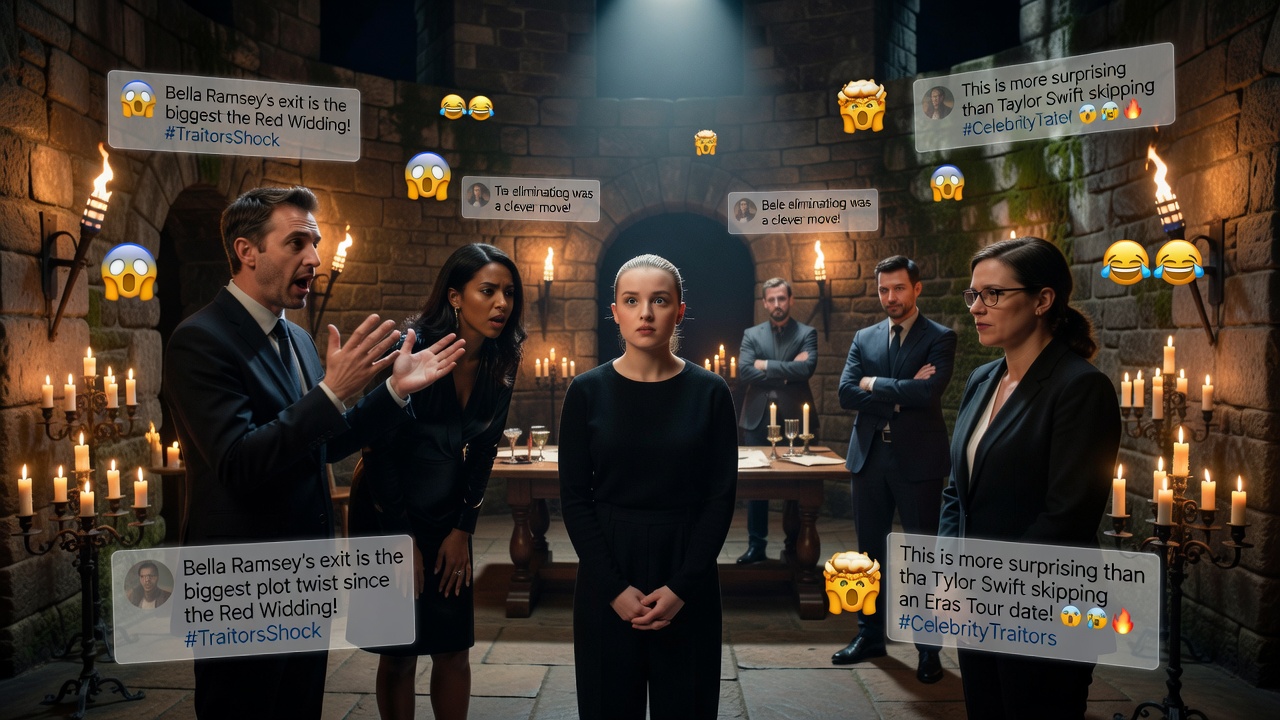
Bella Ramsey's departure from Celebrity Traitors has become the talking point of the week, after the Game of Thrones and The Last of Us star was murdered by the Traitors in a move that blindsided much of the watching public. The decision, orchestrated by James Acaster, Maya Jama and Professor Hannah Fry, pushed aside rival targets James Blunt and Sebastian "Bash" Croft, and immediately lit up social media with disbelief.
Why This Elimination Struck a Nerve
Reality formats built around deception and alliance-building live or die on unpredictability, and Celebrity Traitors has leaned hard into that formula since its launch. Viewers had invested in Ramsey as a sharp, instinctive player, which made the on-screen reaction - somewhere between grief and disbelief - feel genuine rather than manufactured. One fan compared the exit to "Taylor Swift not appearing at the Eras Tour," a hyperbolic line that nonetheless captures how emotionally invested audiences become in characters they believe are playing an honest game.
In the turret, Jama's reasoning was tactical rather than personal: removing Ramsey, she argued, would fracture a tight social cluster among the Faithful. Acaster added that if Ramsey turned out to be innocent, the remaining players would second-guess their own judgment even harder. That psychological ripple effect is precisely what keeps this genre compelling - the game rewards manipulation of perception as much as actual deduction.
The Business Behind the Format
Shows like The Traitors have become a significant asset for broadcasters precisely because they generate sustained, free publicity through audience reaction rather than paid promotion. The format's success lies in structured uncertainty: producers and format owners design elimination mechanics that feel random enough to sustain suspense, while the social dynamics among contestants do the narrative heavy lifting. For BBC One and iPlayer, a format that trends organically on social platforms each week is valuable inventory, extending engagement well beyond the broadcast slot itself.
This matters beyond entertainment circles. Formats built on hidden roles, trust and betrayal have increasingly crossed over into gambling-adjacent markets, with some operators offering speculative markets on reality television outcomes. Where that happens, it raises familiar questions about how outcomes are verified, how odds are set on inherently subjective human behaviour, and how clearly operators communicate that such markets carry no analytical edge beyond audience speculation.
What Comes Next
With Richard E Grant's capture already receding into the background of this series, the Faithful face mounting pressure to identify another Traitor before their numbers thin further. Ramsey's own exit speech - admitting they suspected the move was "clever" - underlines the central tension of the format: players are frequently aware they are being outmanoeuvred even as it happens, which is part of why audiences keep returning each week.