
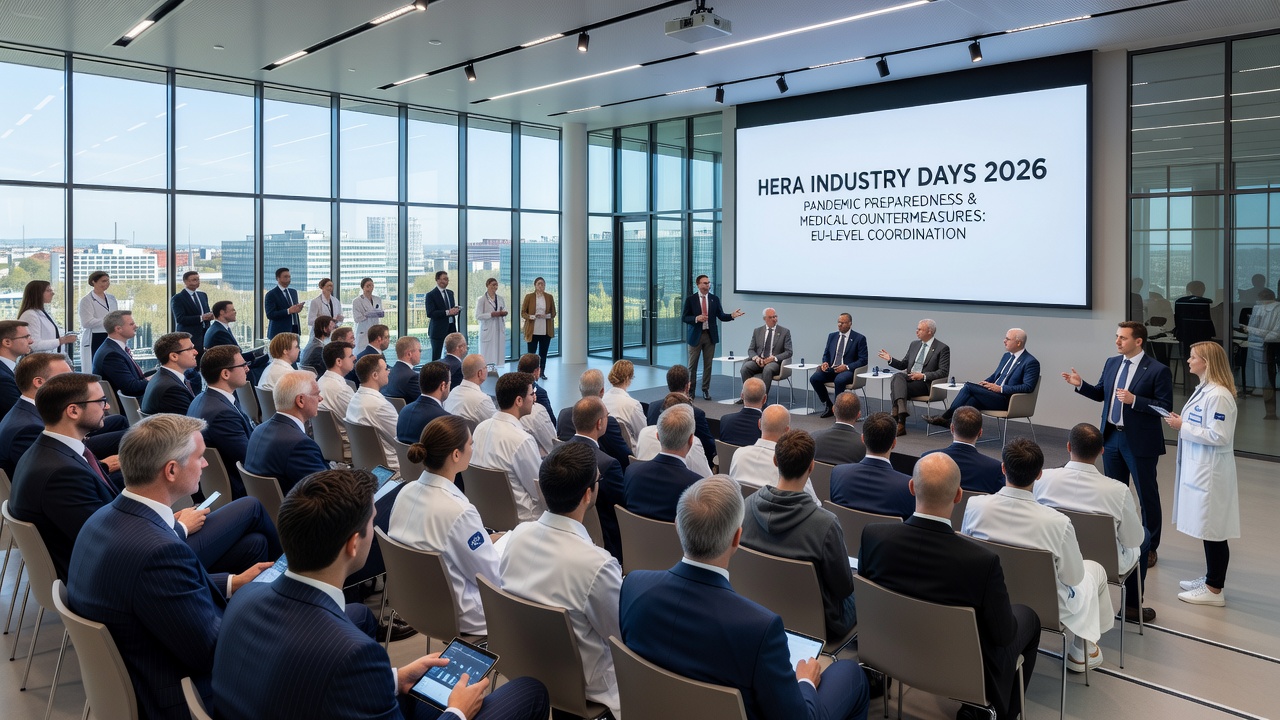
Europe's annual meeting point for pandemic preparedness and medical countermeasures returns in 2026, organised by the European Health Emergency Preparedness and Response Authority, known as HERA. The event brings together industry leaders, EU institutions, researchers, innovators, start-ups and public authorities working on health security, positioning itself as the Commission body's flagship gathering on the subject.
Why a dedicated forum matters
Health crises rarely respect institutional boundaries. The COVID-19 pandemic exposed how dependent Europe had become on external suppliers for vaccines, protective equipment and diagnostic tools, prompting the creation of HERA itself as a standing mechanism to anticipate threats rather than merely react to them. Industry Days formalises that mission into a recurring forum where government officials, scientists and commercial actors can compare priorities directly, rather than through fragmented bilateral contacts. This matters because medical countermeasure development - from vaccines to therapeutics to diagnostic kits - depends on long lead times, specialised manufacturing capacity and regulatory clarity that no single actor can secure alone.
What stakeholders actually discuss
The agenda centres on practical mechanics rather than abstract policy. Attendees address EU health preparedness planning, funding opportunities available through HERA and related Commission instruments, and models for public-private cooperation that can shorten the distance between laboratory research and deployable products. Future health security priorities are also on the table, reflecting the reality that threat assessment is a moving target shaped by emerging pathogens, antimicrobial resistance and geopolitical disruption to supply chains.
- EU-level preparedness planning and coordination between member states
- Funding routes for biotech, medtech and diagnostics innovators
- Public-private partnership structures for countermeasure development
- Strategic priorities for future health emergencies
The role of start-ups and smaller innovators
A notable feature of the event is its explicit inclusion of start-ups alongside established industry leaders. Smaller biotech and medtech firms often hold the early-stage intellectual property and agility that large manufacturers lack, but they typically struggle to navigate EU funding architecture or to find institutional partners willing to co-invest at an early stage. Embedding these companies in the same forum as regulators and major industry players creates a more direct channel for them to understand procurement expectations and funding eligibility, while giving public authorities earlier visibility into emerging technologies before they reach commercial scale.
Networking as policy infrastructure
Beyond formal sessions, the event is structured around dedicated networking opportunities connecting peers across healthcare, biotech and medtech sectors. This is not incidental. Health security cooperation in the EU has historically been constrained by fragmented national systems and inconsistent industrial capacity across member states. Informal relationship-building between researchers, manufacturers and public officials complements the formal funding and policy discussions, helping translate broad preparedness goals into concrete supply agreements and research collaborations that can be activated quickly if a new health threat emerges.