
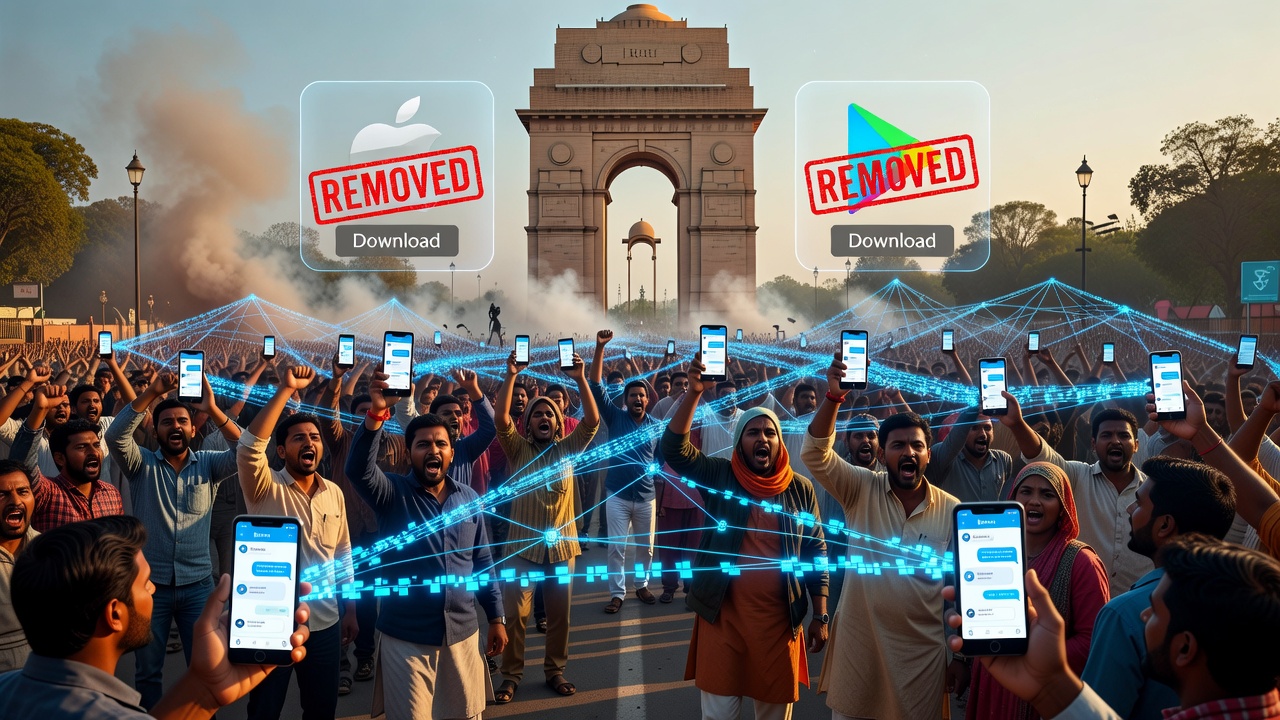
Bitchat, the Bluetooth-based messaging app built by Twitter co-founder Jack Dorsey, is no longer available to download in India through Apple's App Store or Google Play. The removal follows a government order under Section 69A of India's Information Technology Act, the legal mechanism New Delhi uses to block online content and services deemed a threat to public order or national security. It marks the second time in months that Indian authorities have moved against the app's availability in the country.
What Bitchat Does Differently
Bitchat does not route messages through cellular networks, the internet, or centralized servers. Instead, it uses Bluetooth mesh networking, allowing nearby phones to relay encrypted messages directly to one another, hopping from device to device until they reach their destination. That design means the app keeps working when mobile data is cut off or internet access is suspended entirely, a feature that has made it attractive during periods of unrest when authorities impose network shutdowns.
That same resilience is precisely what has drawn regulatory scrutiny. Governments that rely on internet blackouts as a tool to contain protests or slow the spread of information have limited ability to disrupt a network that does not depend on the internet at all. Bitchat's architecture also makes it difficult for law enforcement to intercept communications or identify users, a concern India's IT ministry raised explicitly when it first targeted the app's code repositories on GitHub in July.
Two Legal Routes, One Outcome
The July action and the latest app store removal rest on different legal footing. The GitHub takedown invoked intermediary liability provisions, the rules that determine when platforms hosting third-party content can be held responsible for it. The newer order cited Section 69A, India's primary blocking statute, typically used to restrict access to specific content or services rather than software based on how it functions.
The Internet Freedom Foundation has argued that distinction matters. The advocacy group contends that Section 69A is meant to block unlawful content, not an application because of its technical capacity to operate during connectivity restrictions. It also noted that neither the underlying order nor any specific unlawful content justifying it has been made public, raising transparency concerns common to blocking actions under Indian law, which rarely require public disclosure of the evidentiary basis.
Timing Tied to Civil Unrest
The removal lands amid renewed protests in New Delhi over alleged manipulation of voter rolls, with demonstrators calling for the resignation of the chief election commissioner. Authorities suspended internet access around a central protest site for twelve hours just a day before Bitchat vanished from app stores. During similar unrest in July, protesters turned to Bitchat and a comparable app, Briar, once conventional internet service was cut.
Download data from that period showed how sharply demand can spike around such events: India accounted for roughly 85% of Bitchat's global downloads in a single week in July, up from about 1% in the prior month. That pattern illustrates a broader dynamic in platform regulation - tools built for privacy or resilience often see adoption surge precisely when governments attempt to restrict information flow, putting regulators and decentralized technology providers on a recurring collision course.