
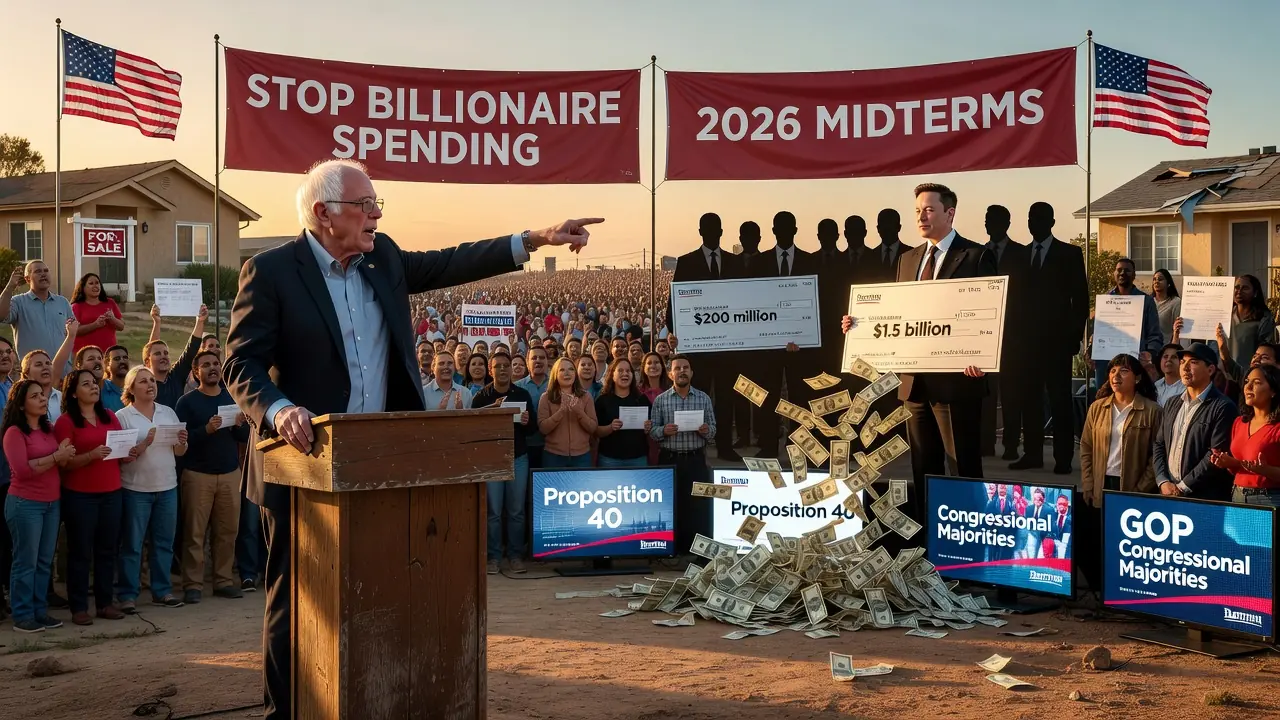
Bernie Sanders used a California rally to accuse the country's wealthiest individuals of trying to buy the outcome of the 2026 midterm elections, arguing that massive personal fortunes are being funneled into campaigns while ordinary families struggle to afford healthcare and housing. The senator put a price tag on the phenomenon, saying billionaires collectively are spending more than $1.5 billion to influence the midterms, and he named Elon Musk specifically as a major contributor to Republican efforts to hold Congress.
Where the Money Is Going
Sanders claimed Musk alone is directing roughly $200 million toward keeping Republican majorities intact, a figure that, if accurate at that scale, would place him among the single largest individual donors in a midterm cycle. The senator also drew attention to California's Proposition 40 fight, where hundreds of millions of dollars are reportedly being spent by outside interests. Ballot measure campaigns like this one often attract spending levels that rival or exceed candidate races, because a single statewide proposition can determine policy outcomes affecting industries, tax structures, or regulatory frameworks for years.
Why Billionaire Political Spending Draws Scrutiny
Large-scale political donations from a small number of ultra-wealthy individuals raise recurring questions about representation and influence. Campaign finance rules in the United States permit substantial personal and independent expenditures, particularly through vehicles such as super PACs, which can accept unlimited contributions as long as they do not coordinate directly with candidates. Critics argue this structure allows a handful of donors to shape political messaging, advertising saturation, and voter outreach in ways that are difficult for less-funded campaigns to counter. Supporters of the current system counter that political spending is a form of protected speech and that disclosure requirements provide enough transparency for voters to judge the source of influence themselves.
What This Means for Voters and Oversight
Sanders' remarks reflect a broader argument he has made for years: that concentrated wealth translates into concentrated political power, and that this dynamic undermines the responsiveness of government to working-class concerns. Whether or not the specific dollar figures cited at the rally match final campaign finance disclosures, the underlying trend is well documented - midterm and ballot-measure spending has grown substantially over the past two decades as wealthy donors and outside groups play a larger role. For voters, the practical takeaway is to watch public campaign finance filings, which are tracked by federal and state election commissions, rather than rely solely on rally rhetoric from any political figure. These filings offer the clearest picture of who is funding political messaging and at what scale, information that becomes especially relevant as California voters weigh Proposition 40 and as national attention turns toward control of Congress in 2026.