
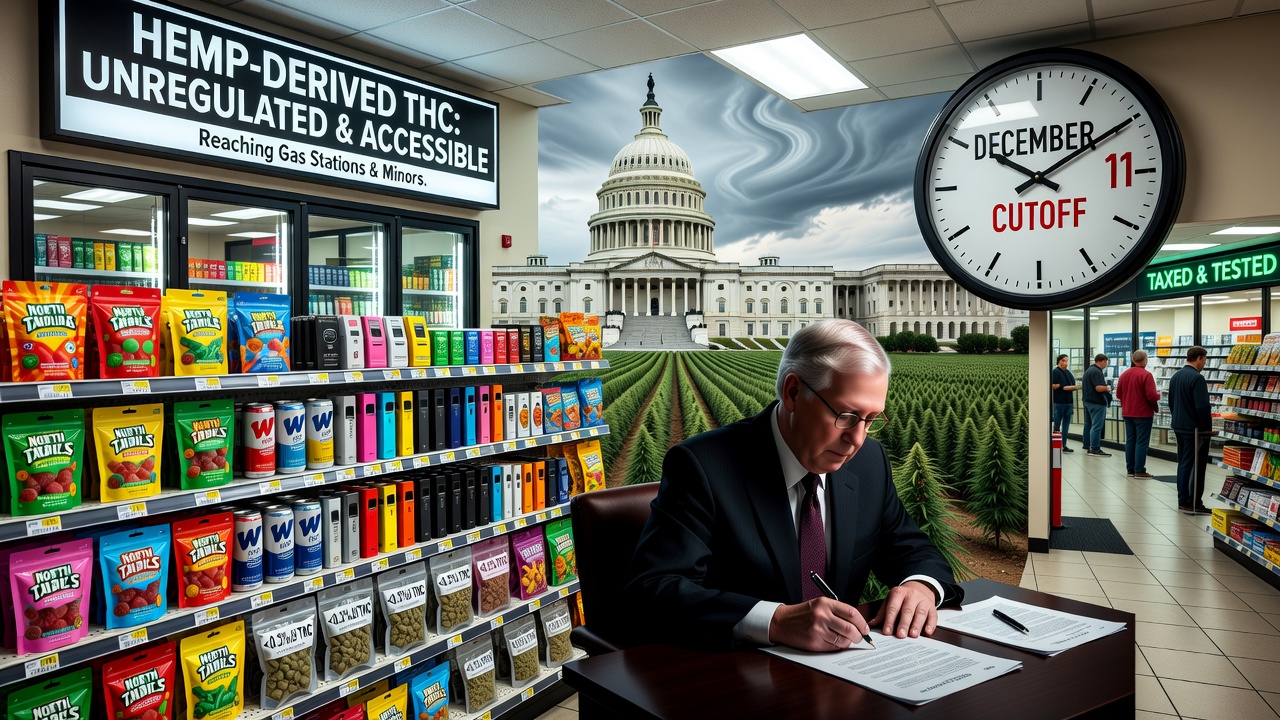
A gummy maker in North Carolina and a seltzer brand in Wisconsin have little in common except the law that may put both out of business next month. Congress has voted to close a federal loophole that let hemp-derived THC products - gummies, drinks, vapes and smokable flower - spread into gas stations, liquor aisles and big-box retailers nationwide without the oversight applied to licensed marijuana. A short-term funding bill pushed the ban's effective date from November 12 to December 11, buying the industry one more month to make its case.
How a Farm Bill Loophole Became a Billion-Dollar Market
The 2018 farm bill legalized industrial hemp by defining it as cannabis containing less than 0.3% delta-9 THC by dry weight. The provision, championed by Senator Mitch McConnell to give farmers a new crop, said nothing about total THC content in a finished product. That gap allowed manufacturers to infuse beverages, candies and vapes with enough THC to intoxicate users while technically complying with the weight-based threshold. Some sellers went further, marketing raw marijuana as "hemp" on the theory that its THC existed in an unconverted form, THC-A, until heated. The result was a parallel, largely unregulated cannabis market operating alongside - and often undercutting - state-licensed marijuana businesses that pay substantial taxes and submit to testing requirements.
A Ban With Sweeping Consequences
McConnell himself closed the loophole late last year, attaching a hemp THC ban to legislation ending a record government shutdown. The new rule caps THC content at 0.4 milligrams per container - a threshold so low it would effectively eliminate not just intoxicating products but some non-impairing CBD items as well, according to industry representatives. Economic analysis cited by trade groups estimates the ban could strip tens of billions in retail revenue and displace hundreds of thousands of jobs, though these figures come from industry-funded research and should be read with that context in mind.
- Products affected include THC seltzers, gummies, vapes and smokable hemp flower sold across state lines
- Dozens of states have already imposed their own restrictions or bans on these products
- The regulated marijuana industry supports the federal ban, viewing hemp THC as unlicensed competition
- Alcohol retailers, including large chains, have lobbied against the ban as cannabis beverages offset declining liquor sales
Business Risk, Consumer Safety and the Path Forward
Hemp industry advocates are proposing compromise measures: age restrictions limiting sales to adults 21 and older, firmer per-package THC caps, and bans on imported synthetic cannabinoids. Companies like Kentucky's Cornbread Hemp say they could adapt to a higher milligram limit but would be destroyed by the 0.4-milligram cap as written. Public health advocates counter that the broader harm from unregulated, widely accessible intoxicants - sold without the testing and age verification required of licensed cannabis - outweighs the economic disruption to hemp businesses.
The underlying tension is familiar to anyone who follows regulated vice industries: products that operate in legal gray zones can scale quickly precisely because they avoid licensing costs, testing mandates and age-verification infrastructure. That same absence of oversight is what concerns regulators and consumer-safety advocates, since unregulated THC products reached convenience stores accessible to minors. Whether Congress settles on an outright ban, a higher THC threshold, or a formal regulatory framework will determine if thousands of small producers survive - and whether consumers get a market with clearer safety standards or lose access to these products altogether.