
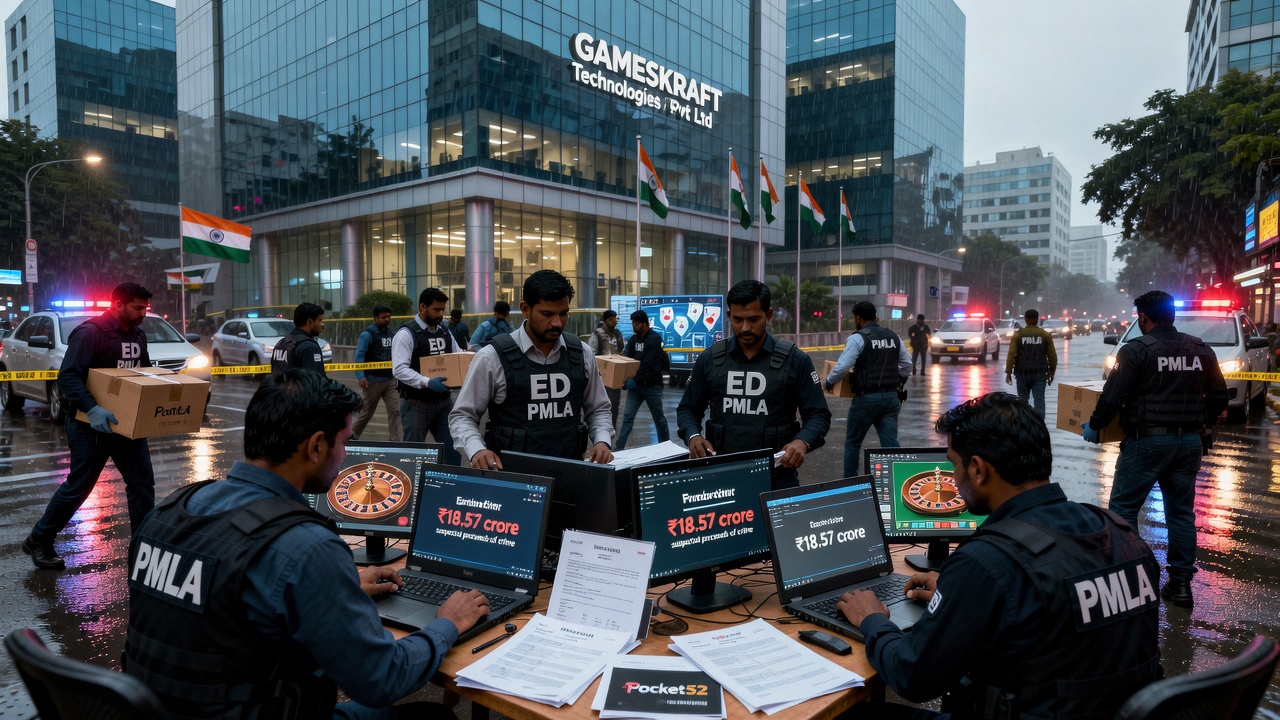
Federal investigators moved against one of India's most prominent online gaming companies on Thursday, May 7, with the Enforcement Directorate conducting searches across Delhi-NCR, Bengaluru and other locations in a money laundering probe tied to alleged online betting operations worth an estimated ₹1,000 crore. The operation, led by ED's Bengaluru Zonal Office, targeted M/s Gameskraft Technologies Pvt Ltd, its directors and several associated individuals.
Officials seized documents, digital records and electronic devices during the raids, building on an earlier round of searches conducted last year against the same company in a related but distinct matter. The case underscores how deeply intertwined real-money gaming platforms have become with questions of financial oversight, particularly as products marketed around games of skill or chance draw scrutiny over how outcomes are determined and disclosed to users - a debate that extends even to formats like online roulette, where the difference between immersive roulette vs live roulette often comes down to production technology rather than the underlying odds, yet still shapes how players perceive fairness and transparency. immersive roulette vs live roulette
From Local FIRs to a Federal Money Laundering Probe
The current investigation traces back to multiple FIRs filed at local police stations in Bengaluru, which the ED subsequently took over under the Prevention of Money Laundering Act. This is a familiar pattern in Indian gaming enforcement: state police register complaints based on user grievances, and once financial irregularities suggest laundering or proceeds of crime, the case escalates to federal jurisdiction. A separate but related strand of the investigation, conducted between November 18 and 22 last year, examined premises linked to Nirdesa Networks Pvt Ltd and Gameskraft in Bengaluru and Gurugram, centred on the poker platform Pocket52.
Allegations of Manipulation and Withheld Funds
Complaints against Pocket52 reportedly described manipulated game outcomes, player collusion, restricted withdrawals and a general lack of operational transparency. One complainant alleged losses exceeding ₹3 crore. These are serious claims that, if substantiated, point to a breakdown in the basic trust mechanisms that any real-money gaming platform depends on - verifiable randomness, clear withdrawal terms and honest disclosure of how algorithms determine outcomes. Users of skill-based and chance-based gaming products alike often have limited visibility into backend systems, which is why regulatory frameworks increasingly demand independent audits and escrow protections.
Escrow Accounts and Regulatory Pressure
Under the Online Gaming Promotion and Regulation Act, 2025, platforms are subject to restrictions designed to protect user funds. The ED alleges that despite these rules, more than ₹30 crore remained unreturned to customers in escrow accounts. The agency has since frozen eight such accounts holding approximately ₹18.57 crore, treating the funds as suspected proceeds of crime pending further investigation.
- ED searches spanned Delhi-NCR, Bengaluru and other locations under PMLA provisions
- Multiple Bengaluru FIRs against Pocket52 alleged manipulated outcomes and blocked withdrawals
- Roughly ₹18.57 crore across eight escrow accounts has been frozen as suspected proceeds of crime
The case arrives amid growing regulatory attention on India's real-money gaming sector, where rapid user growth has outpaced consistent enforcement of fund-protection and fairness standards. For consumers, it is a reminder that platform claims about transparency and payout integrity warrant scrutiny, and that regulatory frameworks are still catching up with an industry built on complex digital infrastructure and fast-moving capital flows.